

Transfer Learning, Finding Learning Rate, and More

Training a neural network from scratch is unnecessary in a situation when pretrained models are readily available. This notebook showcases loading a pretrained model directly from pytorch.models subpackage, its subsequent re-training for the specific problem at hand, a method used to determine the optimal learning rate, ways of defining custom transforms and finally assembling several models into an ensemble.

PyTorch_Article

Once again, the examples are based on Chapter 4 of Ian Pointer’s “Programming PyTorch for Deep Learning”, released by O’Reilly in 2019.

Jupyter notebook of the model may be found on GitHub: https://tinyurl.com/yyzth69w

Also, the same notebook is available on Google Colab (where it can be tested it against the GPU available there): https://tinyurl.com/y4rlnqfs
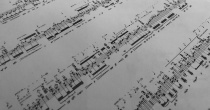
ΠΕΡΣΈΠΟΛΙΣ Γ (Persepolis Gamma) @ YouTube

Originally written in February 2010. as a required piece for chamber string ensemble during my 3rd year as a student of undergraduate composition program under mentorship of professor Milan Mihajlović. Revised for the guitar ensemble during recording sessions in 2019. Edited, mixed and mastered by Nikola Pacek-Vetnić between June 2019 and February 2020.

Listen to HD audio @SoundCloud: https://soundcloud.com/nikolapacekvetnic/persepolis-gamma

Written by Nikola Pacek-Vetnić. All guitars and bass guitars recorded by Nikola Pacek-Vetnić between February and September 2019.

Special thanks to Nikola Dmitrašinović (provided guitar for recordings), Željko Popović (provided bass guitar for recordings), Marko Slaviček (provided advice and listened to WIPs of the piece), KLVB27 (designed the logo used as cover for the track).

Study score available via Google Drive. HD audio available at SoundCloud.